
Our 5 Favourite New Books on Watches

Hodinkee Book Feature

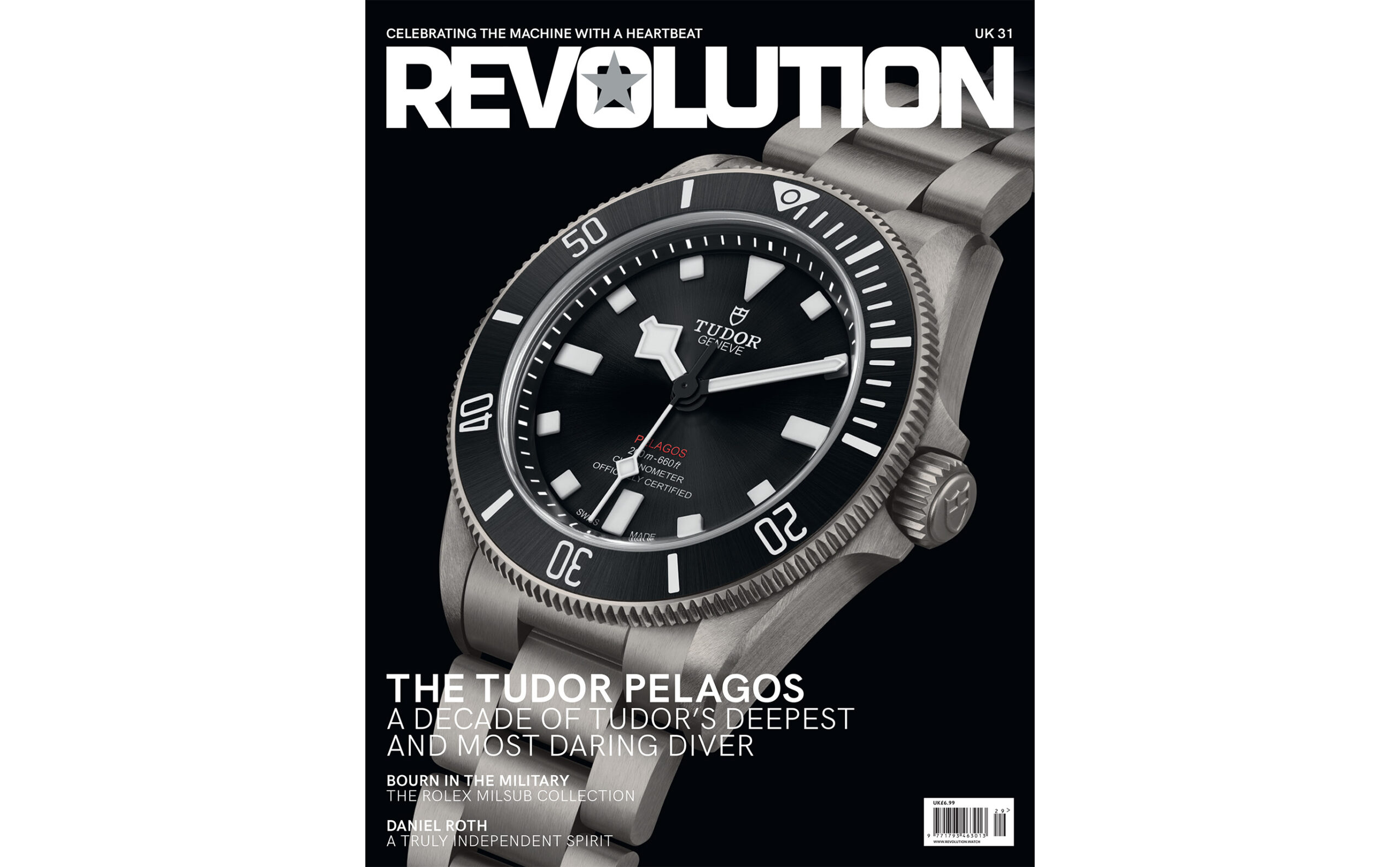
The Collections Vol. I Featured on HODINKEE

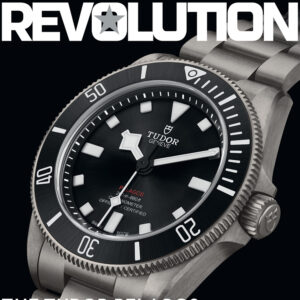
HODINKEE recently included The Collections Vol. by Daniel Bourn in their 2025 Recommended Reading list, recognizing it as one of the most insightful new books in the world of watches.


🔗 Read the full feature on HODINKEE

The Tudor ‘MN’ Military Submariner

The relationship between Tudor and the French Navy, or Marine Nationale, is one of the most storied partnerships in military horology. Beginning in 1956, Tudor supplied watches for field testing to Groupe d’Étude et de Recherches Sous-Marines (G.E.R.S.), a research and development arm of the Marine Nationale focused on underwater exploration and combat diving. The first model references, 7922 and 7923, underwent rigorous trials before receiving approval by the French Navy. This endorsement marked the beginning of an official supplier relationship in 1961, a collaboration that would continue into the early 1980s and then be reignited in 2021.

1961 Marine nationale diver with Tudor 7924 (Image: Joël BRUN ECPAD Défense)

Tudor’s Marine Nationale Submariners were exclusively issued to navy divers, commandos, and special forces operators, serving as essential tools in underwater missions. Over the years, Tudor refined its dive watch designs based on the feedback and revised requirements of the Marine Nationale, leading to some of the most iconic military-issued dive watches ever produced.

What makes a Tudor an MN?

For collectors and enthusiasts, true Marine Nationale-issued Tudor watches have an unmistakable identity shaped by their military provenance, specific references, and unique configurations that evolved over nearly three decades of service. Unlike Rolex Submariners issued to the UK forces which featured attributes unique to ‘issued’ watches, Tudor MN Submariners were indistinguishable from their civilian counterparts until 1974. Below is a summary of key references issued to the French Navy, along with the configurations that define each period.

References Issued to the Marine Nationale:

  • 7922 Small Crown (1956–1957)
  • 7923 Small Crown (1956)
  • 7922 Big Crown (1957–1958, prototype cases based on Rolex 6538)
  • 7924 Big Crown (1958–1959)
  • 7928 Crown Guard Submariner (1959–1968)
  • 7016 Snowflake (1974–1975, black dial)
  • 9401 Snowflake (1975–early 1980s, blue dial)
  • 9401 Mercedes hands and Triangle Markers (early 1980s, blue dial)

Key Configurations by Era

1956 – Reference 7922 (First Batch, Small Crown)
The first Tudor Submariners delivered to the Marine Nationale in 1956 were designated as model reference 7922. These watches featured black gilt dials marked 100m, Mercedes hands, and a 6mm Rolex winding crown. This was the batch tested by G.E.R.S. before Tudor became an official supplier to the French Navy.

A Tudor Submariner 7922 (Image: Tudor Watch)

1956 – Reference 7923 (Manual Wind, Small Crown)
Delivered alongside reference 7922, the reference 7923 was also issued. These watches featured black gilt dials marked 100m, pencil hands, and a 6mm Rolex winding crown. The dials did not feature the word PRINCE, which signified that the watch had a manual wind movement, as Prince was Tudor’s equivalent of Rolex’s Perpetual.

A Tudor Submariner 7923 (Image: Tudor Watch)

1957 – Reference 7922 (Big Crown Prototype Cases)
In 1957, Tudor experimented with a new design in response to Marine Nationale feedback for a more robust case with an easier to operate winding crown, by repurposing Rolex Submariner 6538 cases. These watches were fitted with Tudor dials and movements, but retained their original Rolex serial numbers, with the 6538 reference re-engraved as 7922 between the lugs. The case backs had 6538 crossed out and 7922 punched above. These watches kept a 7922 100m dial but were capable of diving to a depth of 200m thanks to the Rolex case, Mercedes hands, and an 8mm Rolex winding crown.

The inner case back of the 7922 Big Crown (Image: RPR)

1958 – Reference 7924 (Big Crown)
Following the success of the reworked 7922, Tudor introduced the 7924 in 1958, the first Submariner officially rated to 200m. Fitted with gilt dials marked 200s and Mercedes hands and like the previous experimental batch, it featured an 8mm Rolex winding crown.

A Tudor Submariner 7924 (Image: Tudor Collector/Luca Garbati)

1959 – Reference 7928 (Crown Guard Case)
By 1959, Tudor introduced the 7928, marking a major design shift with the addition of crown guards. This model evolved through four variations of crown guards: Square, Eagle Beak, Pointed, and Rounded crown guards. Alongside these case modifications, the 7928 initially featured a gilt black 200m dial, Mercedes hands, and a 7mm Rolex winding crown. This model remained in production for over a decade and the dials transitioned from glossy to matte in the mid to late 1960s.

A first series ‘Square Guard’ Tudor Submariner 7928 (Image: Tudor Watch)

A ‘Pointed Crown Guard’ Tudor Submariner 7928 (Image: Tudor Watch)

1974 – Reference 7016 (First Snowflake MN Watches)
The arrival of the 7016 in 1974 signalled a new era for Marine Nationale Tudors. This was the first reference to feature the now-iconic Snowflake hands, developed in direct response to requests for improved underwater legibility. The early 7016s were fitted with black dials and black bezel inserts, paired with square marker dials. These watches retained the 7mm Rolex winding crown. Crucially, this was also the first reference to feature the hallmark MN case back engravings, with issued examples engraved MN74. Watches from this batch generally fall within the 827xxx serial range.

The first black Snowflake Submariner 7016 (Image: Tudor Watch)

1975 – Reference 9401 (Blue Snowflake MN Watches)
In 1975, Tudor introduced the reference 9401, which became the definitive Marine Nationale Tudor for many collectors. These watches featured blue dials with matching blue bezel inserts, Snowflake hands, and the same square marker dial layout as the earlier 7016. The 7mm Rolex winding crown remained unchanged. These watches were issued through the early 1980s and continued the MN case back engraving tradition.

The iconic blue Snowflake Submariner 9401 issued to the MN (Image: Tudor Watch)

Early 1980s – Reference 9401 (Blue Mercedes or lollipop hands MN Watches)
By the early 1980s, the last generation of Marine Nationale Tudors transitioned to a new dial configuration. These late 9401s featured blue dials and bezel inserts but reverted to Mercedes pattern hands, paired with a triangle marker dial layout. The 7mm Rolex winding crown remained a consistent feature. These were among the last Tudors officially issued to the Marine Nationale before the official relationship came to an end.

Last series 9401 with lollipop hands and triangle quarters (Image: Fratello)

Key Features of MN-Issued Watches
Determining whether a Tudor Submariner was officially issued to the Marine Nationale can be challenging. Unlike many military-issued timepieces that came with standardised documentation, Marine Nationale Tudors were tools of the trade, utilitarian watches issued directly to Navy divers and commandos with little regard for future collectability.

The full ledger book from Toulon, listing all the MN watches serviced (Image: RPR)


An example of a page from the ledger (redacted serials). For example, line 206 shows a Tudor with serial 912xxx issued to Commando Hubert (Image: Watch My Watch)

One of the most important sources for verifying an MN-issued Tudor comes from a Rolex watchmaker based in Toulon, who meticulously recorded every Marine Nationale Tudor that passed through his workshop for servicing. However, it is crucial to note that these records only account for watches issued to the southern base in Toulon. There are no surviving records for watches issued in northern France, making verification for those examples much more difficult.

For models issued before 1974, the only definitive way to confirm an MN-issued watch is if it appears in the Toulon watchmaker’s ledgers. Watches from this period lack military engravings, meaning provenance and historical documentation are essential.

A Submariner 9401 issued in 1975 – note the long form date that was only used in 1975 (Image: Tudor Collector)

A Submariner 9401 issued in 1978 (Image: Christoper Beccan)

From 1974 to 1982, Marine Nationale Tudors featured distinct case back engravings, making them far easier to identify. These engravings followed a standardised format with the letters MN followed by the year of issue. The placement of the engraving varied slightly over the years:

  • 1974 – MN 74 – Centre of case back
  • 1975 – MN 1975 – Centre of case back (the only year with the full year engraved)
  • 1976 – MN 76 – Centre of case back
  • 1977 – MN 77 – Centre of case back
  • 1978 – MN 78 – Bottom of case back
  • 1979 to 1982 – MN 79, MN 80, MN 81 and MN 82 – Centre of case back

While these engravings provide strong evidence of Marine Nationale provenance, collectors should always be mindful of originality. Over the decades, some watches have had their engravings polished off or case backs swapped during service. As always with military watches, careful research and authentication remain key.

The Modern Evolution: The Pelagos FXD

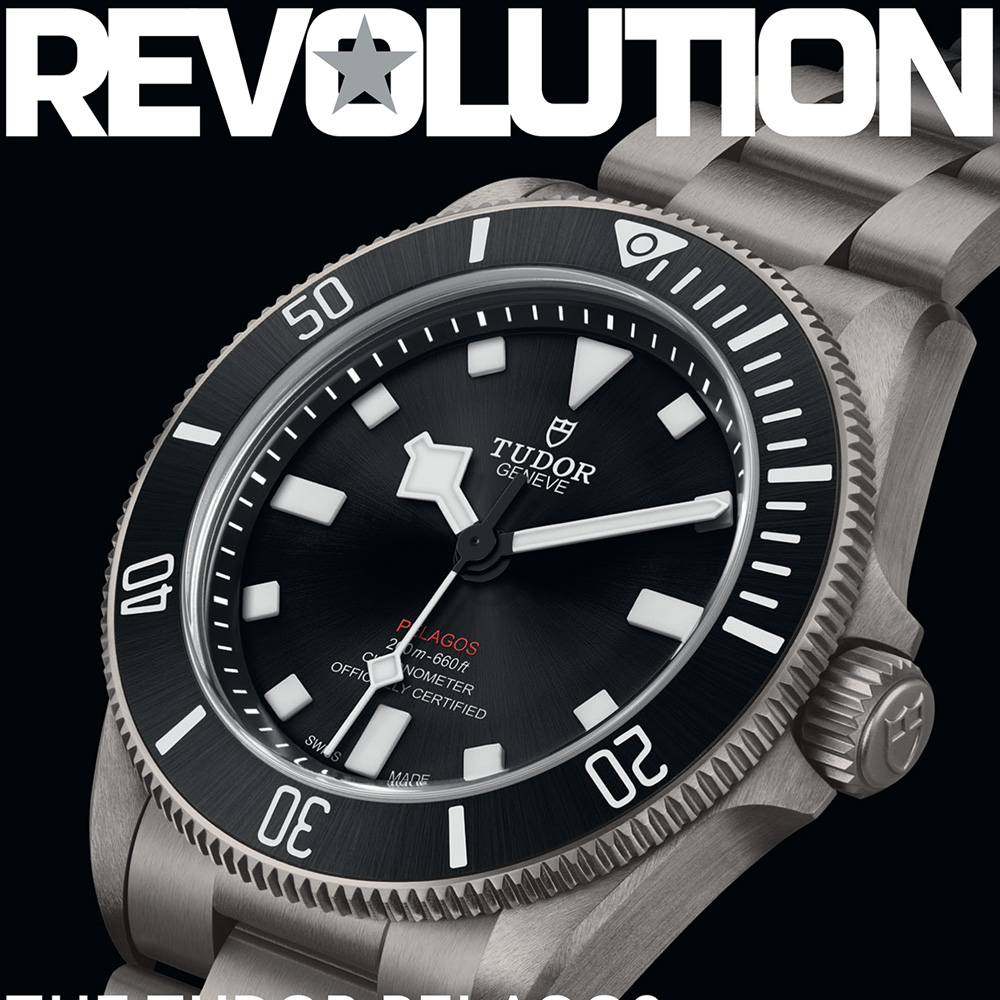
In May 2021, Tudor reaffirmed its historical connection with the Marine Nationale, announcing an official partnership with the French Navy. While the brand had long celebrated its military heritage, most notably with the Black Bay Fifty-Eight, the launch of the Pelagos FXD marked a significant return to true military collaboration. Unlike previous releases that paid homage to the past, the FXD was designed specifically for modern Marine Nationale divers, tailored to the operational needs of Commando Hubert, the elite combat swimmer unit of the French Navy.

The standard production civilian Pelagos FXD with four-line dial (Image: Tudor Watch)

Whilst the FXD is very much a watch designed with the Marine Nationale, the actual watches delivered to the Commando Hubert divers differ from those sold by official Tudor retailers. The most obvious difference is the dial. Devoid of any mention of chronometer certification, the issued watches display a stripped-back aesthetic, featuring only PELAGOS and 200m, not even the imperial 600ft depth rating. This no-nonsense approach to the dial design reinforces the FXD’s role as a purpose-built military tool.

The case back is also significantly different. One of the most distinctive elements of the retail FXD is the engraved MN case back, a direct nod to the hallmark case back engravings found on vintage Marine Nationale Tudors from the 1970s and 1980s. These historical engravings consisted of MN followed by a short-form year, such as MN74 for 1974 or MN76 for 1976. (A small but interesting detail—only in 1975 did Tudor engrave the full year, marking watches as MN 1975.) The retail FXDs continue this tradition, with watches produced in 2021 engraved MN21, followed by MN22 in 2022, and so on. However, the actual issued watches used by Commando Hubert divers feature a much more stripped-back case back, engraved with only the year and a small issue number, reinforcing their utilitarian nature.

Finally, the reference number of the issued watches is ‘25797’ where the civilian reference is ‘25707’.

A Command Hubert delivered Pelagos FXD. Note the two-line dial. (Image: Monaco Legend Group)

The FXD retains the core characteristics that made Marine Nationale Tudors iconic: a robust, functional design, lightweight materials, and fixed strap bars for added durability. With its 42mm titanium case, ultra-legible dial, and bi-directional countdown bezel—specifically designed for underwater navigation—it is a modern-day MilSub, not just a marketing exercise. It embodies Tudor’s historical relationship with the Marine Nationale while proving that the collaboration remains as functional today as it was in the 1950s.

For collectors and enthusiasts, Marine Nationale Tudors remain among the most desirable tool watches on the market. Whether it’s the patinated charm of an original “M.N.”-engraved 7016 or the cutting-edge engineering of the Pelagos FXD, these watches embody the perfect balance of heritage, functionality, and military precision.

A Command Hubert delivered Pelagos FXD with accessories (Image: Monaco Legend Group)

By Ross Povey for Daniel Bourn. 

Ross Povey is a journalist, editor and founder of tudorcollector.com. He is internationally recognised as the leading authority on vintage Tudor watches and a key figure in the Tudor collecting community.

© Copyright Daniel Bourn www.danielbourn.com

If you would like to discuss, learn, or SELL your vintage military-issued Rolex, Tudor, Omega, or Blancpain timepiece, please don’t hesitate to contact us:

info@danielbourn.com
+44 7977 469 568
@daniel.bourn

Receive the latest watch content – straight to your inbox. SUBSCRIBE here

The Rolex ‘Military’ Submariner

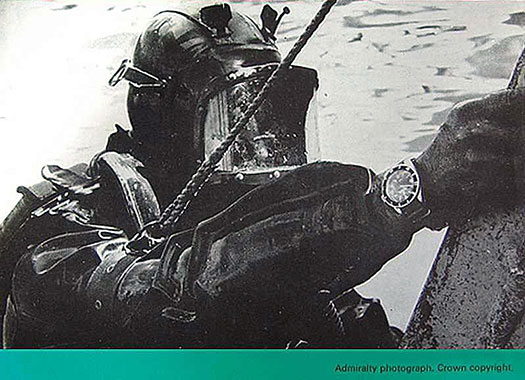
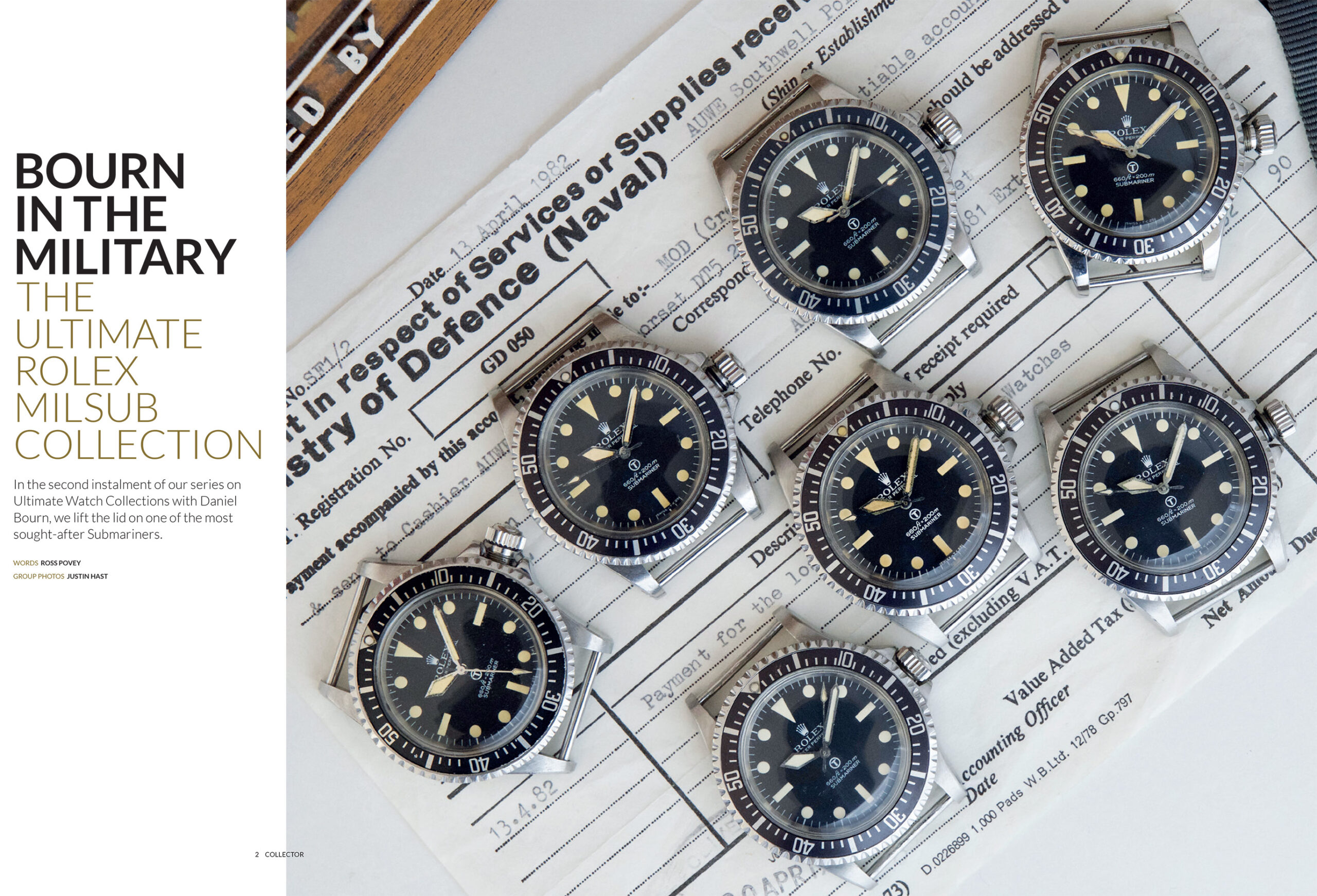
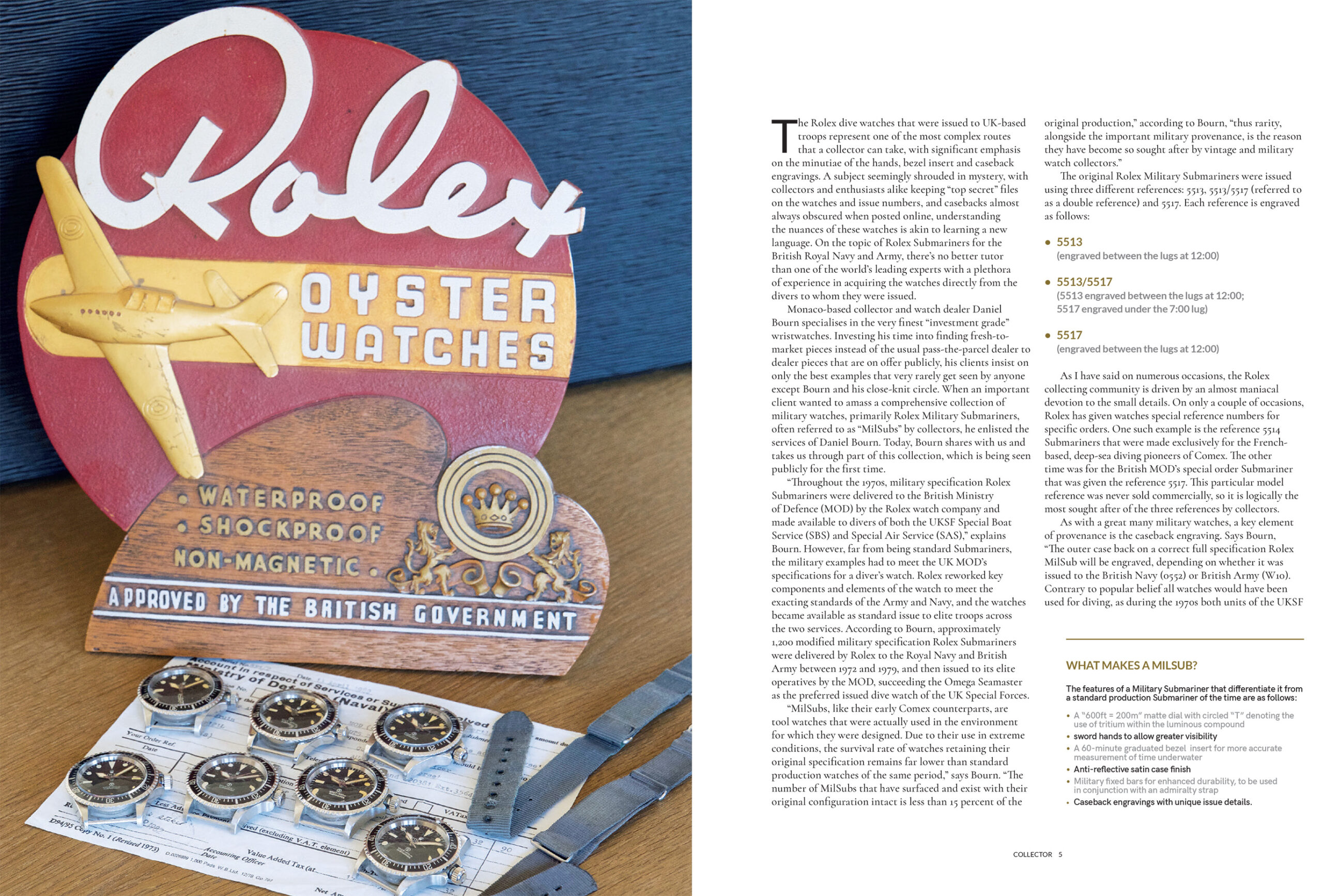
In 1972, the Rolex Submariner replaced the Omega Seamaster as the watch of choice for the UK military, as specified by the Ministry of Defence (MoD). Military-specification Rolex Submariners (often referred to as MilSubs by collectors) were delivered to the MoD by the Rolex Watch Company and issued to both the UK Special Forces (UKSF), Special Boat Service (SBS) and Special Air Service (SAS) divers.

The features of the military Rolex Submariner differed from those of the standard production Submariner sold through authorised retail outlets, as the military versions were modified to meet the specific requirements of the MoD’s elite units.

Approximately 1,200 modified, military-specification Rolex Submariners were delivered by Rolex to the Royal Navy and British Army between 1972 and 1979.

Due to their use in challenging environments, the survival rate of MilSubs in their original configuration is low. This rarity, combined with their fascinating and important military provenance, is the reason they have become so sought after by vintage and military watch collectors.
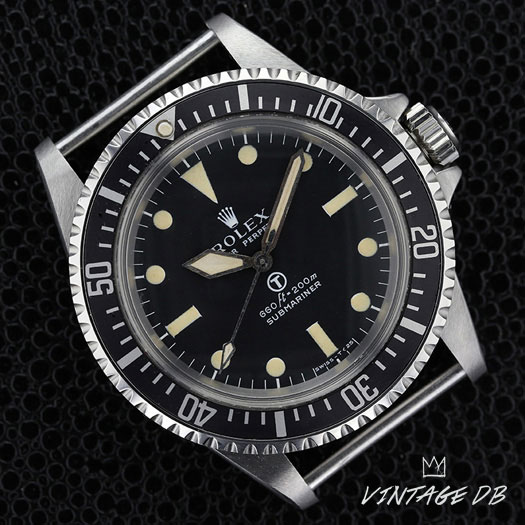

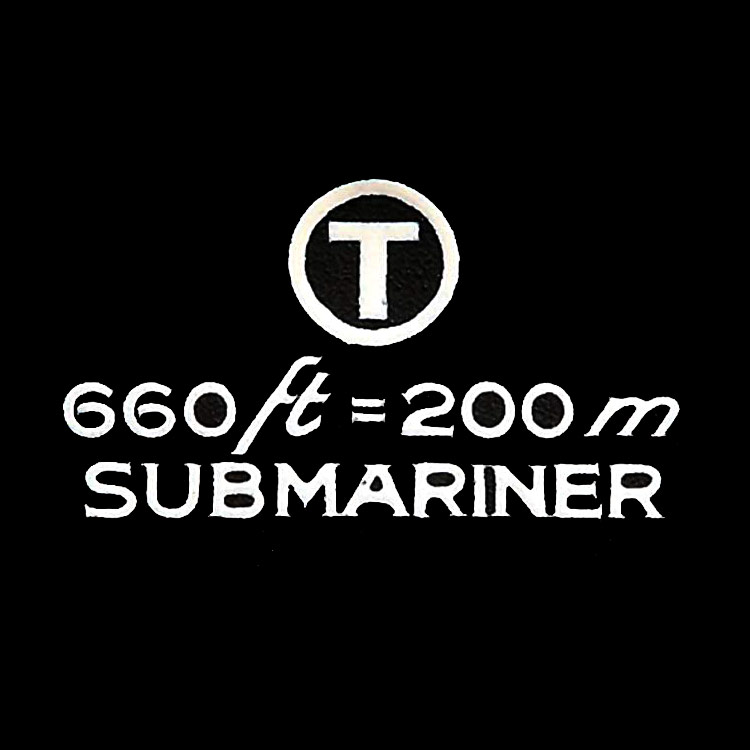
A full-spec MilSub reference 5513 (Image: The Collections Vol I)

The Model References

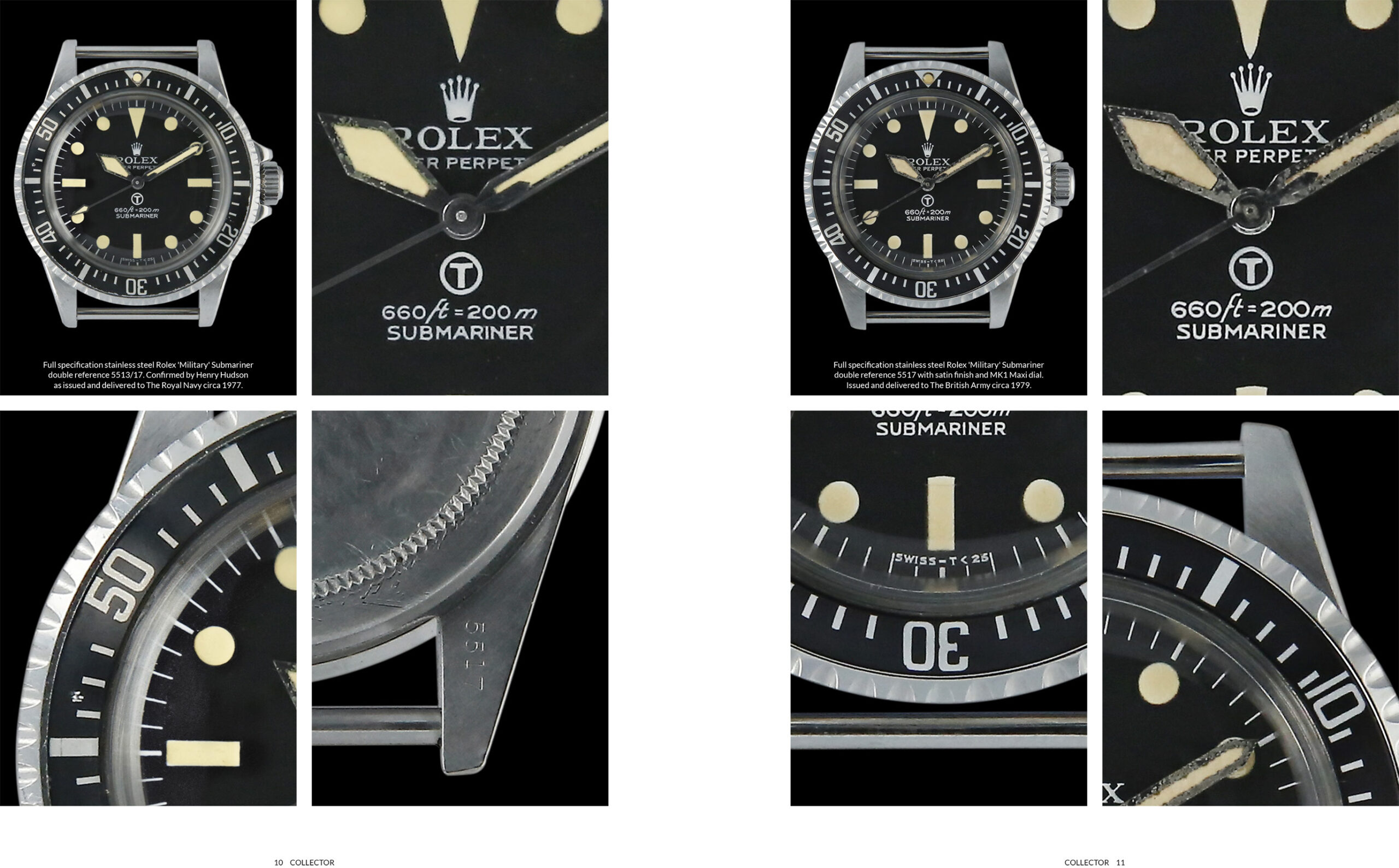
The original Rolex military Submariners were issued using three different references 5513, 5513/5517 (referred to as a double reference) and 5517. Each reference is engraved as follows:-

  • 5513                (engraved between the lugs at 12:00)
  • 5513/5517     (5513 engraved between the lugs at 12:00, and 5517 engraved below the 7:00 lug)
  • 5517                (engraved between the lugs at 12:00)

Note: Whereas model reference 5513 was a modified version of the existing standard-production Rolex Submariner, model reference 5517 was unique to the military Submariner. This particular reference was never sold commercially and has therefore become the most sought-after of the three references among collectors.


The 5517 engraving on the lug of a double reference 5513/5517 (Image: The Collections Vol I)

Full Specification

Each reference of the Rolex Military Submariner shared the same modified specifications:

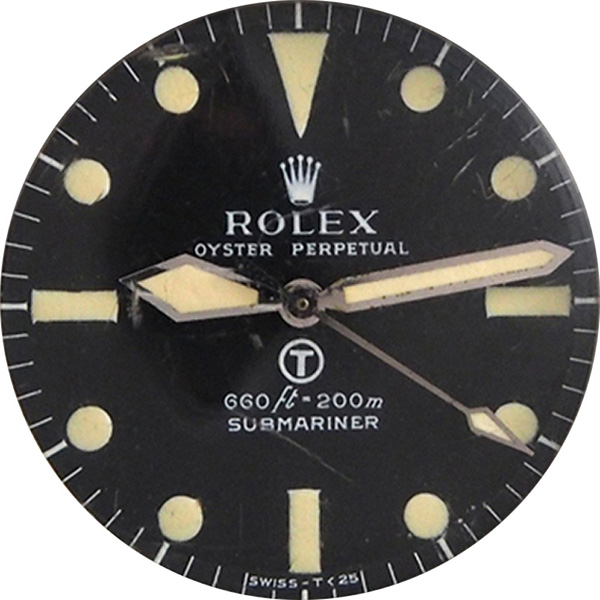
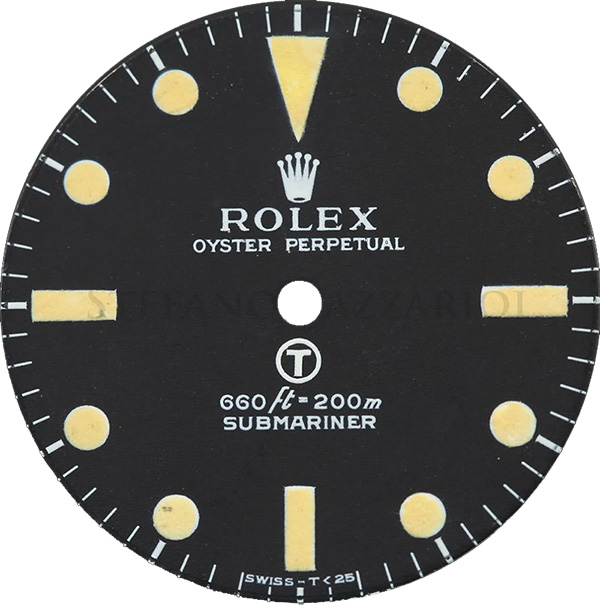
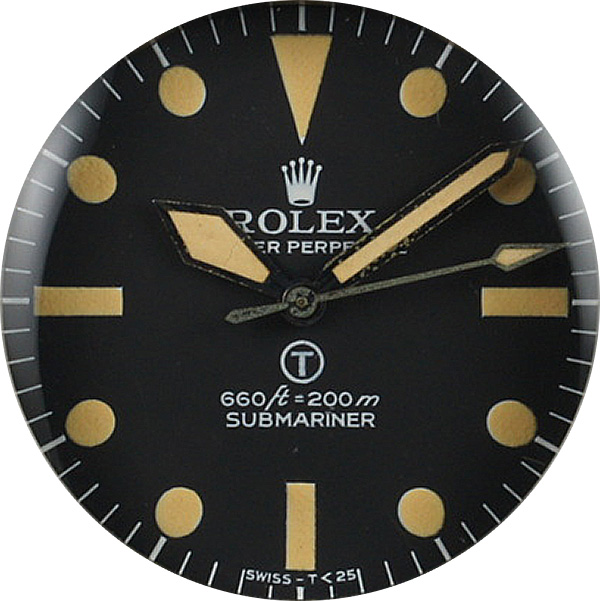
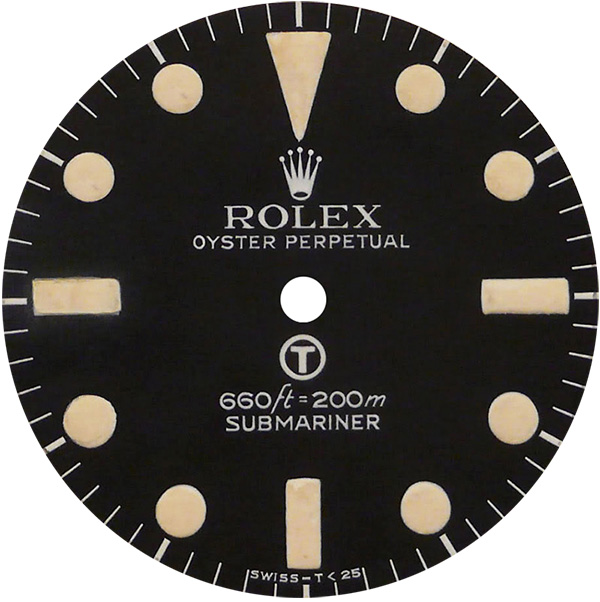
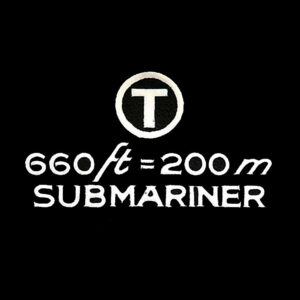
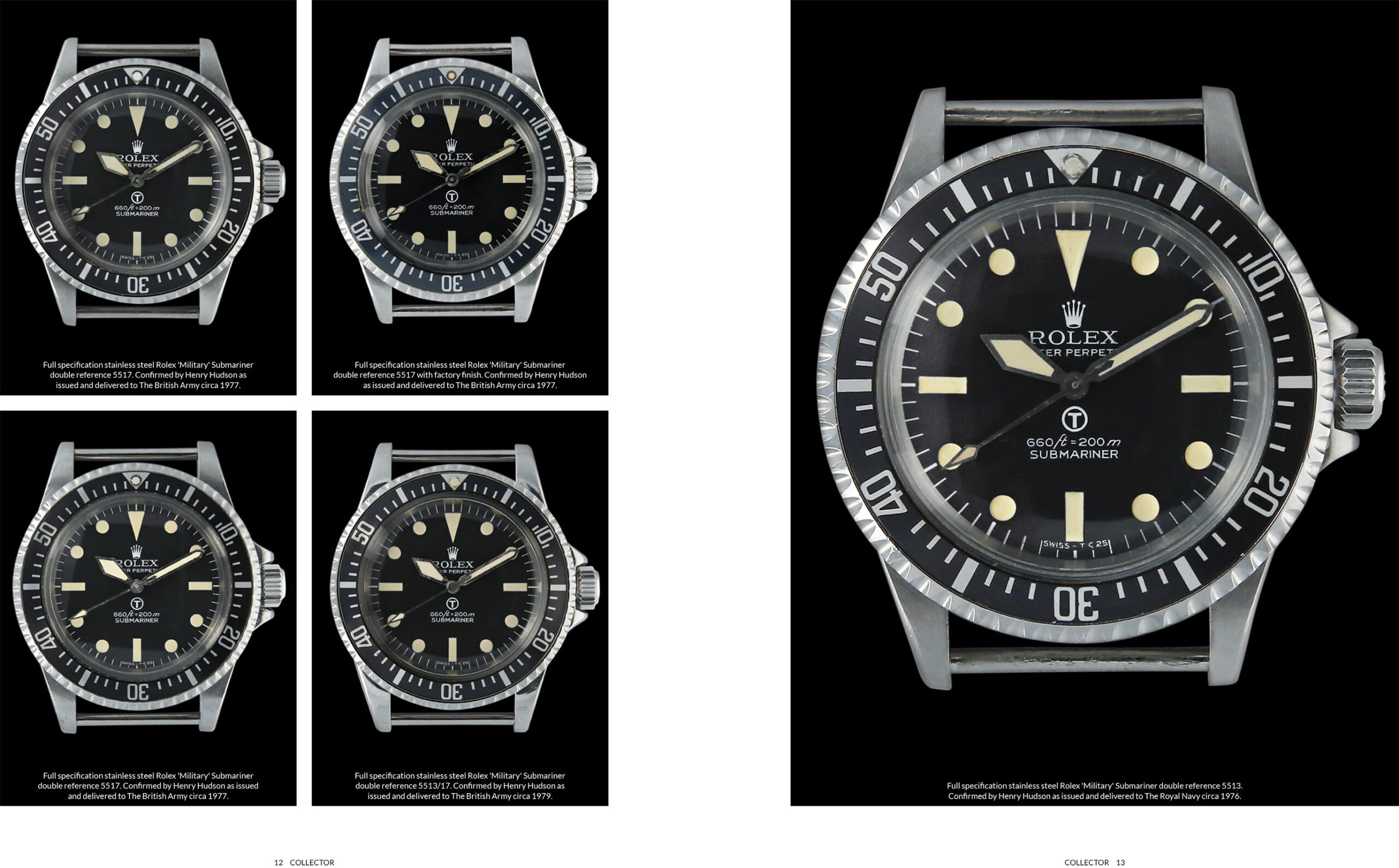
  • A 600 ft = 200 m matte dial with a circled ‘T’, denoting the use of tritium in the luminous compound
  • Sword or ‘gladiator’ hands for greater visibility
  • A continuously graduated 60-minute bezel insert for more accurate time measurement underwater
  • An anti-reflective satin case finish
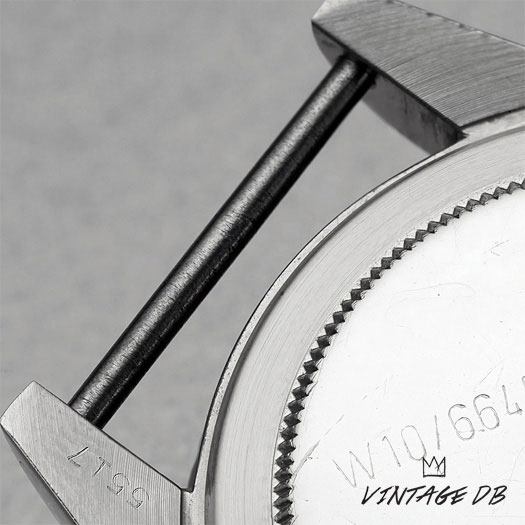
  • Military fixed bars for enhanced durability, designed for use with an Admiralty strap
  • Military, crown property, and unique issue case-back engravings

As mentioned above, due to the harsh conditions they were often exposed to, MilSubs required servicing more frequently than their standard civilian counterparts. Unfortunately, this has resulted in far fewer watches surviving in their original configuration. Watches that remain in original condition, with the full military specification as defined above, therefore continue to attract significant premiums.


The MoD-specified continuously graduated 60-minute bezel insert (Image: The Collections Vol I)

The Dials

The dials of the issued Rolex military Submariner were standard Submariner dials, modified with a circled ‘T’ placed below the hands and above the SUBMARINER model designation.

Between 1972 and 1979, four dial variations were used, as follows:

Serif

Non Serif

Smudge Crown

Maxi Mk 1

The different dial types were not exclusive to any particular model reference but were relevant to the date of issue of the watch. For example, a serif dial should typically be found on certain batches of model reference 5513 until 1977, and on the final batch of 3.9 million double references (5513/5517) issued in 1979. The non-serif dial is most often found on watches with serial numbers in the 3.7 and 3.8 million range. The so-called smudge or pre-Comex dials are generally found on watches issued circa 1976/77. The maxi dial appears on watches issued from 1977 onwards.

It should be noted that variations on the above exist, as dials may have been swapped or replaced during servicing, especially by MoD watchmakers.


A full-spec MilSub reference 5517 with maxi dial (Image: The Collections Vol I)

Outer Case Backs

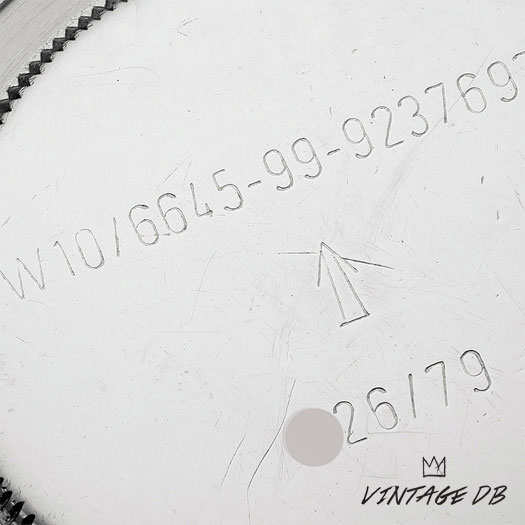
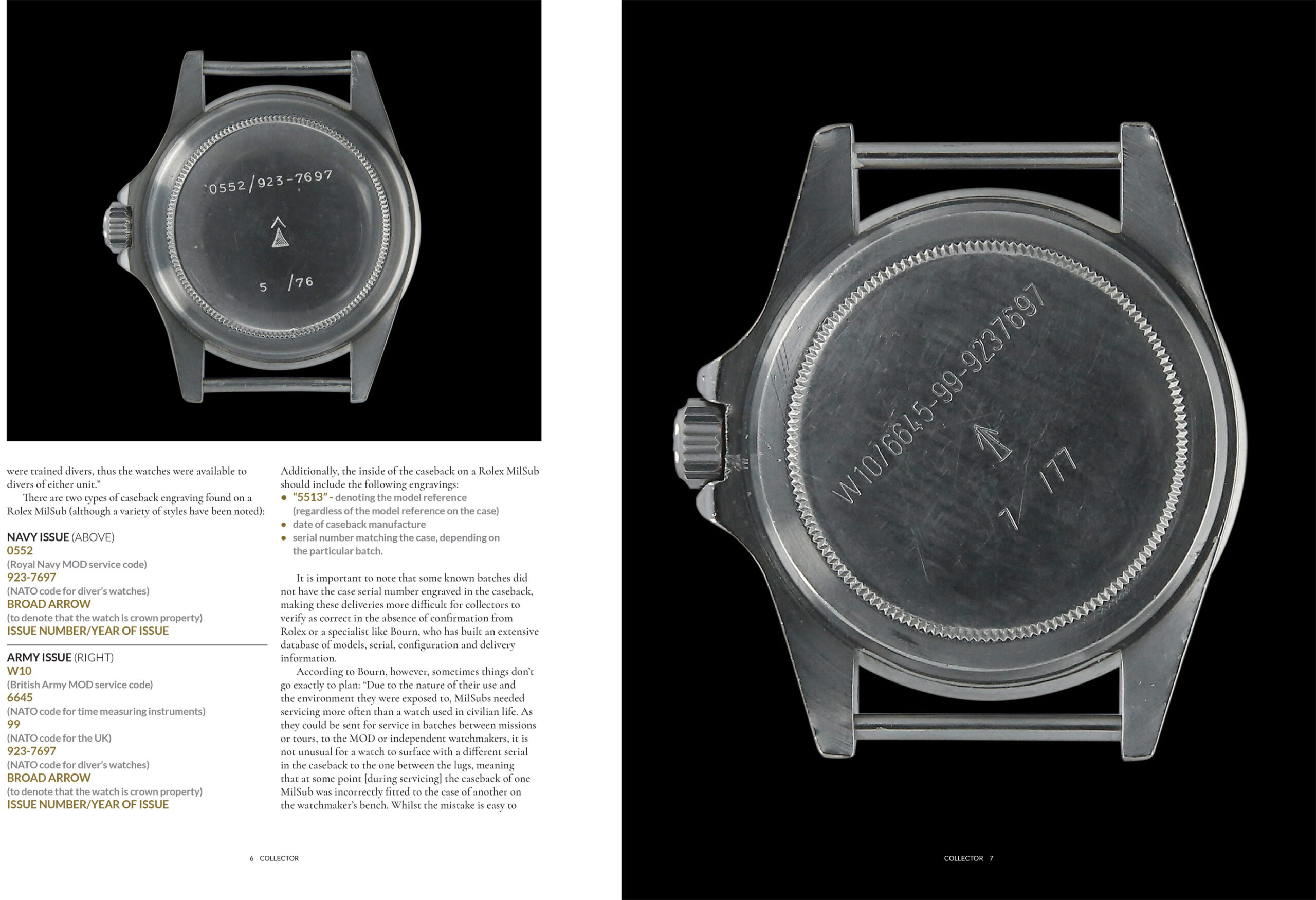
The outer case back on a correct, full-specification Rolex MilSub was engraved according to whether it was a British Navy (0552) or British Army (W10) issue.

Contrary to popular belief, all watches would have been used for diving. Although the W10 deliveries were Army or SAS issue, during the 1970s, both units trained as divers, and the watches were therefore available to divers from either branch.

Royal Navy (0552 issue):

  • 0552 (RN MOD service code)
  • 923-7697 (NATO code for divers’ watches)
  • Broad Arrow
  • Issue number / Year of issue

British Army (W10 issue):

  • W10 (MOD code for the Army)
  • 6645 (NATO code for time-measuring instruments)
  • 99 (NATO code for the UK)
  • 923-7697 (NATO code for divers’ watches)
  • Broad Arrow
  • Issue number / Year of issue


An Army-issued case back (Image: The Collections Vol I)

Inner Case Backs

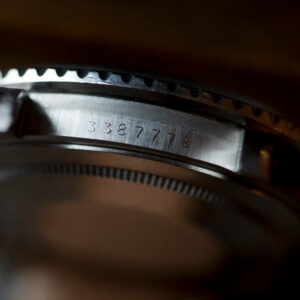
The inner case back on a correct Rolex MilSub will include the following engravings:

  • Model ref. ‘5513’
  • Date of case/case back manufacture
  • Serial number matching the case (depending on the particular batch. Some known batches did not have the case serial number engraved in the case back)

Important: MilSubs sometimes surface with mismatching serials in the case back, meaning that at some point the case back of one MilSub was incorrectly fitted to the case of another during service by MoD or independent watchmaker. Whilst the mistake is easy to understand, it has a significant impact on the value and desirability of the watch.

Documentation

The original 1970s military Rolex Submariner deliveries to the MoD, for issue to the UKSF, were not supplied with the typical box and papers that accompanied standard Submariners sold through retailers. However, later documentation can accompany these watches, which are of particular interest to collectors. This documentation generally takes the form of:

  • Documented provenance from the original owner, such as details of service, photographs, and dive logs. It must be noted, however, that due to the covert nature of their occupations, many original owners prefer to remain anonymous, making such documentation difficult to acquire.
  • A Rolex delivery confirmation letter signed by the former General Manager of Rolex UK, Henry Hudson.

In the 1970s, Mr. Hudson’s department was responsible for delivering the military-specification Submariner to the UK military. Although he later assumed the role of General Manager of Rolex UK, he continued to retain the original delivery records for each issued watch (including serial number, case-back number, and unit or dockyard). Until his retirement in 2011, he would often kindly provide this information, where available, to owners of a MilSub via a signed letter on Rolex-headed paper.


A pair of full-spec MilSubs with original Admiralty straps and Henry Hudson letter (Image: The Collections Vol I)

Unfortunately, since his retirement, this service is no longer available. Rolex no longer confirms the original delivery information. While watches accompanied by the “HH papers,” as they are commonly referred to, do not carry a significant financial premium, collectors value the reassurance regarding the original issue that such documentation provides.

Perfectly correct and collectible examples continue to surface on the market without papers. This does not mean they should not be acquired and enjoyed. We recommend consulting one of a handful of known specialists (ourselves included) who have been collating model reference, serial, case-back, and delivery information for many years. Such experts can provide reassurance regarding the batch to which your watch belongs and any specific nuances you should expect to find.

© Copyright  Daniel Bourn www.danielbourn.com

If you would like to discuss, learn, or SELL your vintage military-issued Rolex, Tudor, Omega, or Blancpain timepiece, please don’t hesitate to contact us:

info@danielbourn.com
+44 7977 469 568
@daniel.bourn

Receive the latest watch content – straight to your inbox. SUBSCRIBE here

Milsub advert